Ensuring Purity & Compliance: A Q/A Manager's Guide to Safe Mono & Diglycerides (O) Sourcing
Chemical Engineer
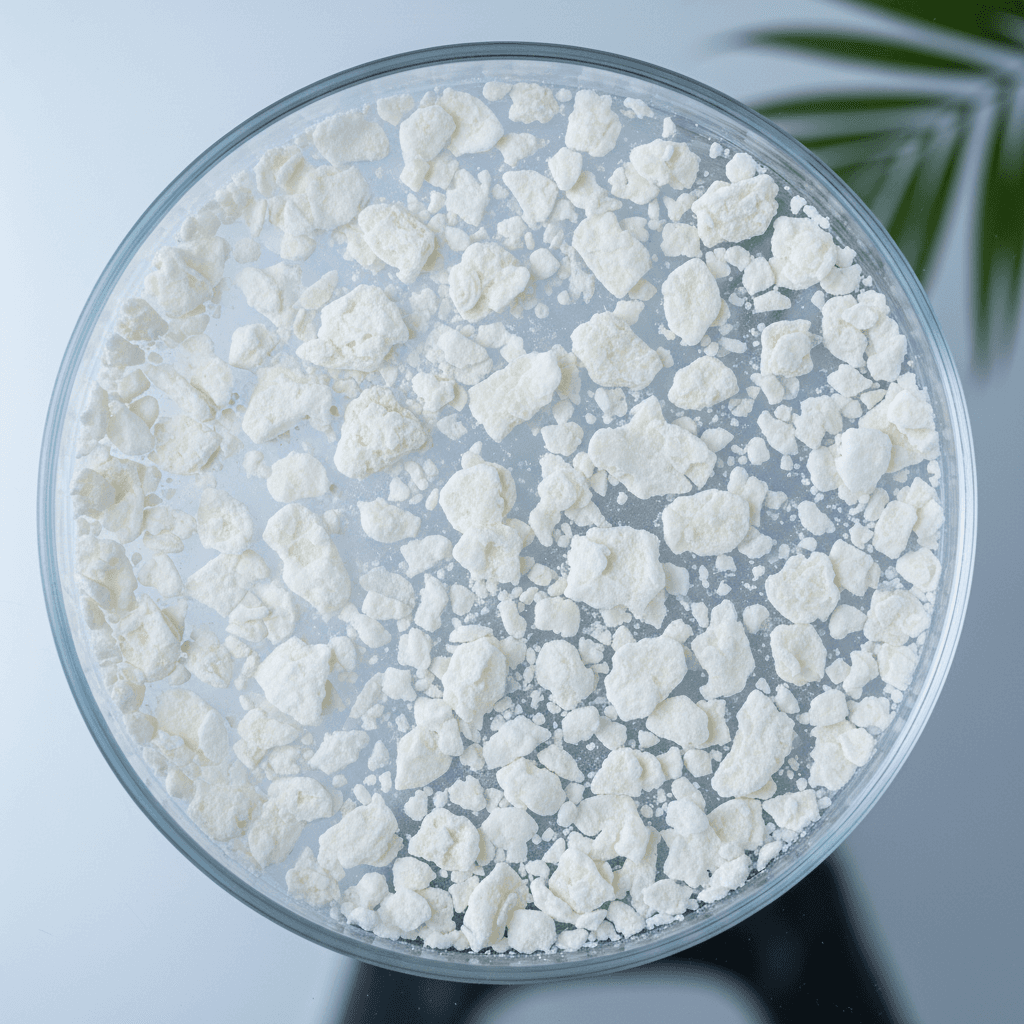
For Compliance Officers and Q/A Managers in the rigorous Food and Pharmaceutical sectors, the integrity and safety of every ingredient are paramount. The global market for food emulsifiers, a category where Mono & Diglycerides (O) plays a crucial role, is projected to reach over $4.5 billion by 2028, underscoring its ubiquitous presence in consumer products. This widespread application, however, brings heightened scrutiny, demanding meticulous adherence to safety protocols and regulatory frameworks. Failing to meet these standards can result in severe consequences, from product recalls and financial penalties to irreversible brand damage. At CanCastor, we understand that mitigating these risks begins with a transparent, technically sound, and trustworthy supply chain for critical ingredients like Mono & Diglycerides (O), where the "(O)" specifically indicates a higher content of fatty acids derived from oleic acid – a key differentiator for performance and purity.
Unpacking the Safety & Regulatory Landscape of Mono & Diglycerides (O)
Mono & Diglycerides (O), a glycerol ester, is widely recognized for its exceptional emulsifying properties, derived from high-quality vegetable oils. Its dual functionality allows it to bridge oil and water phases, making it indispensable in countless formulations. However, its safety profile in food and pharmaceutical applications is not merely assumed; it is meticulously regulated and documented to ensure consumer and occupational safety.
GHS Classification and SDS/MSDS Standards: Your First Line of Defense
For any B2B procurement professional or Q/A Manager, the Safety Data Sheet (SDS), formerly Material Safety Data Sheet (MSDS), is the foundational document for understanding a chemical’s hazards and safe handling procedures. In the context of Mono & Diglycerides (O) (CAS: 27215-38-9), particularly our premium food and pharma grades, a properly executed SDS will typically classify the substance as non-hazardous under the Globally Harmonized System of Classification and Labelling of Chemicals (GHS). This classification is a critical indicator of its generally benign nature when handled correctly. However, a comprehensive SDS goes beyond hazard identification, detailing:
- Composition/Information on Ingredients: Precise disclosure of components, especially important for a mixture like Mono & Diglycerides, emphasizing the oleic acid content.
- First-Aid Measures: Protocols for exposure scenarios.
- Fire-Fighting Measures: Guidance for safe extinguishment.
- Accidental Release Measures: Procedures for containment and clean-up.
- Handling and Storage: Specific instructions to prevent degradation and maintain stability, crucial for preserving its functional properties and preventing potential hazards.
- Exposure Controls/Personal Protection: Recommended PPE and engineering controls.
- Physical and Chemical Properties: Data points like melting point, boiling point, flash point, and specific gravity, which inform safe processing and storage.
- Stability and Reactivity: Conditions to avoid and incompatible materials.
- Toxicological Information: Detailed data on acute and chronic effects, typically indicating low toxicity for Food/Pharma grades.
- Ecological Information: Environmental impact considerations.
- Disposal Considerations: Safe disposal methods.
- Transport Information: Classification for safe transit.
- Regulatory Information: References to national and international regulations.
At CanCastor, we ensure that our SDS documents are readily available, fully compliant with GHS standards, and regularly updated to reflect the latest scientific understanding and regulatory requirements. This commitment to transparent documentation is a cornerstone of our About CanCastor's sourcing standards, providing Q/A managers with the verifiable information needed for due diligence.
Navigating Global Regulatory Compliance: OSHA, REACH, and EU CLP
Compliance with international and regional regulations is non-negotiable for industries operating on a global scale. Mono & Diglycerides (O) must meet stringent criteria to be used in food and pharmaceutical products worldwide:
- OSHA (Occupational Safety and Health Administration) in the U.S.: OSHA's Hazard Communication Standard (HCS) aligns with GHS principles, requiring employers to provide information to their employees about hazardous chemicals through labels and SDSs. For a substance like Mono & Diglycerides (O), while generally non-hazardous, adherence to proper handling and storage practices is still essential to maintain a safe working environment and prevent physical hazards (e.g., slips from spills).
- REACH (Registration, Evaluation, Authorisation and Restriction of Chemicals) in the EU: REACH is a comprehensive regulation addressing the production and use of chemical substances and their potential impacts on human health and the environment. As a glycerol ester, Mono & Diglycerides (O) (and its primary component, Glyceryl Monooleate, CAS 27215-38-9) is either pre-registered or registered under REACH, signifying its thorough evaluation for safety. Compliance with REACH demonstrates a commitment to robust safety assessments and responsible chemical management.
- EU CLP (Classification, Labelling and Packaging) Regulation: This regulation implements the GHS in the European Union, ensuring that hazards posed by chemicals are clearly communicated to workers and consumers through standardized classification, labeling, and packaging. Our Mono & Diglycerides (O) products are classified and labeled in accordance with EU CLP, providing unambiguous safety information across the supply chain.
Purity Standards: USP, BP, and the Food Chemical Codex (FCC)
For Food/Pharma grade Mono & Diglycerides (O), mere compliance is not enough; product purity is paramount. Industry standards such as the United States Pharmacopeia (USP), British Pharmacopoeia (BP), and the Food Chemical Codex (FCC) set rigorous specifications for identity, purity, and quality. These pharmacopeial monographs often detail analytical methods for determining fatty acid composition, iodine value, saponification value, acid value, and limits for heavy metals, residual solvents, and microbial contamination. Our premium Food/Pharma grade Mono & Diglycerides (O) is manufactured to meet or exceed these critical standards, ensuring that it is suitable for direct incorporation into sensitive formulations where purity directly impacts patient safety and consumer health.
Real-World Applications & Safety Assurance
The versatility of Mono & Diglycerides (O) in both pharmaceutical and food applications highlights its importance, but also the critical need for unwavering safety and quality control.
Pharmaceutical Industry: Enhancing Drug Delivery and Stability
Application Scenario 1: Oral Drug Formulations for Enhanced Bioavailability.
Mono & Diglycerides (O) serves as a critical lipid excipient in pharmaceutical formulations, particularly for poorly water-soluble active pharmaceutical ingredients (APIs). Its emulsifying properties are leveraged in self-emulsifying drug delivery systems (SEDDS) or self-microemulsifying drug delivery systems (SMEDDS). For instance, in a pharmaceutical company developing a new lipid-soluble anti-inflammatory drug, the API's absorption was limited due to poor aqueous solubility. By formulating the API within a SEDDS utilizing Mono & Diglycerides (O) as a primary emulsifier and lipid vehicle, the drug's dispersion in the gastrointestinal tract was significantly enhanced upon ingestion. This led to a substantial improvement in bioavailability, allowing for lower dosing and reduced side effects. The safety aspect here is two-fold: ensuring the excipient itself is pharma-grade pure, free of contaminants, and stable under storage conditions, and that its use does not compromise the stability or efficacy of the API, which relies heavily on a consistent, high-quality ingredient supply.
Food & Beverage Industry: Stabilizing Emulsions and Extending Shelf Life
Application Scenario 2: Preventing Fat Bloom in Confectionery and Stabilizing Plant-Based Products.
In the food sector, Mono & Diglycerides (O) is indispensable for its ability to stabilize fat-in-water or water-in-oil emulsions, improve texture, and extend shelf life. Consider a large-scale confectionery manufacturer facing challenges with fat bloom – a common quality defect where cocoa butter separates and crystallizes on the surface of chocolate, leading to an unappetizing appearance. By incorporating CanCastor's Mono & Diglycerides (O) into their chocolate formulations, the emulsifier helped to modify the crystallization behavior of fats, preventing bloom and maintaining a smooth, appealing surface. This directly impacts consumer perception and product integrity. Similarly, in the rapidly growing plant-based dairy alternative market, Mono & Diglycerides (O) are crucial for stabilizing emulsions in products like oat milk or soy yogurt, preventing phase separation and ensuring a consistent, creamy mouthfeel throughout their shelf life. Our blog post on Glycerol Monooleate (GMO): Pioneering Advanced Emulsification and Stability for Industrial & Food Formulations delves deeper into how oleic acid derivatives excel in such demanding applications.
Why CanCastor: Your Partner in Trustworthy Mono & Diglycerides (O) Supply
Choosing a supplier for critical food and pharmaceutical ingredients is a decision that extends far beyond price; it's about establishing a partnership rooted in trust, reliability, and an unyielding commitment to quality. CanCastor differentiates itself by embodying these principles, ensuring that your procurement of Mono & Diglycerides (O) is synonymous with peace of mind.
Uncompromised Quality Assurance and Documentation
Our manufacturing processes for Mono & Diglycerides (O) adhere to stringent Good Manufacturing Practices (GMP) and are supported by an exhaustive quality management system. Each batch undergoes rigorous testing to confirm compliance with all relevant pharmacopeial and food-grade specifications. This meticulous approach guarantees consistency and purity, which is critical for sensitive applications. We provide comprehensive documentation for every shipment, including:
- Certificates of Analysis (CoA): Detailed batch-specific analytical results, verifying the product meets stated specifications.
- Technical Data Sheets (TDS): Offering in-depth product characteristics, application guidelines, and recommended storage conditions.
- Safety Data Sheets (SDS): As discussed, fully GHS-compliant, providing critical safety and handling information. This proactive transparency allows your Q/A teams to streamline their incoming material inspections and compliance checks, significantly reducing internal lead times and operational risks.
Robust Supply Chain and Global Logistics Capabilities
For B2B buyers, supply chain stability is a strategic imperative. CanCastor's established global logistics network ensures the reliable, on-time delivery of bulk Mono & Diglycerides (O) to facilities worldwide. Our bulk supply capabilities are designed to meet diverse industrial demands, from tanker loads to intermediate bulk containers (IBCs), supported by efficient scheduling and transparent tracking. This logistical prowess minimizes supply disruptions, an essential factor for maintaining continuous production and avoiding costly downtime. Our expertise in managing the intricate logistics of chemical distribution is detailed in discussions like our post on Glycerol Monostearate (NSE) Food Grade: Unlocking ROI & Supply Chain Stability for B2B Procurement, highlighting our commitment to operational excellence across our glycerol ester portfolio.
Certifications and Industry Recognition
Our commitment to excellence is externally validated through various certifications. Depending on the product and grade, these may include ISO 9001 for quality management, Kosher, and Halal certifications, which are crucial for reaching diverse consumer markets. These certifications are not merely badges; they represent an ongoing dedication to operational rigor and ethical sourcing, aligning with the highest industry standards.
We invite you to explore our Mono & Diglycerides (O) product page for detailed specifications and to see our full range of offerings. You can also Browse our full chemical catalog to discover other premium industrial chemicals and derivatives.
Conclusion: Partnering for Safety and Success
For Compliance Officers and Q/A Managers, the safe and compliant sourcing of Mono & Diglycerides (O) is not a mere checkbox exercise; it's a foundational element of product integrity and brand reputation. CanCastor stands as a trusted global partner, offering premium-grade Mono & Diglycerides (O) backed by meticulous quality assurance, comprehensive documentation, and a robust, transparent supply chain. Our adherence to global safety standards (GHS, REACH, EU CLP, OSHA) and pharmacopeial purity requirements (USP, BP, FCC) ensures that you receive an ingredient that meets the highest benchmarks for safety, stability, and performance. By choosing CanCastor, you're not just procuring a chemical; you're securing a partnership dedicated to mitigating risk, fostering compliance, and building long-term trust in your critical formulations. This commitment to safety extends to every aspect of our operations, even down to the detailed handling guides, as emphasized in resources like Mastering Glycerol Mono Laurate (GML) Food Grade: A Lab Technician's Essential Guide to Handling & Application.
Request a wholesale quote for CanCastor's premium Mono & Diglycerides (O) today and ensure your products meet the highest safety and quality standards.