Cetyl Palmitate Safety & Regulatory: A Compliance Officer's Guide to Risk Mitigation & Trust in B2B Supply Chains
Chemical Engineer
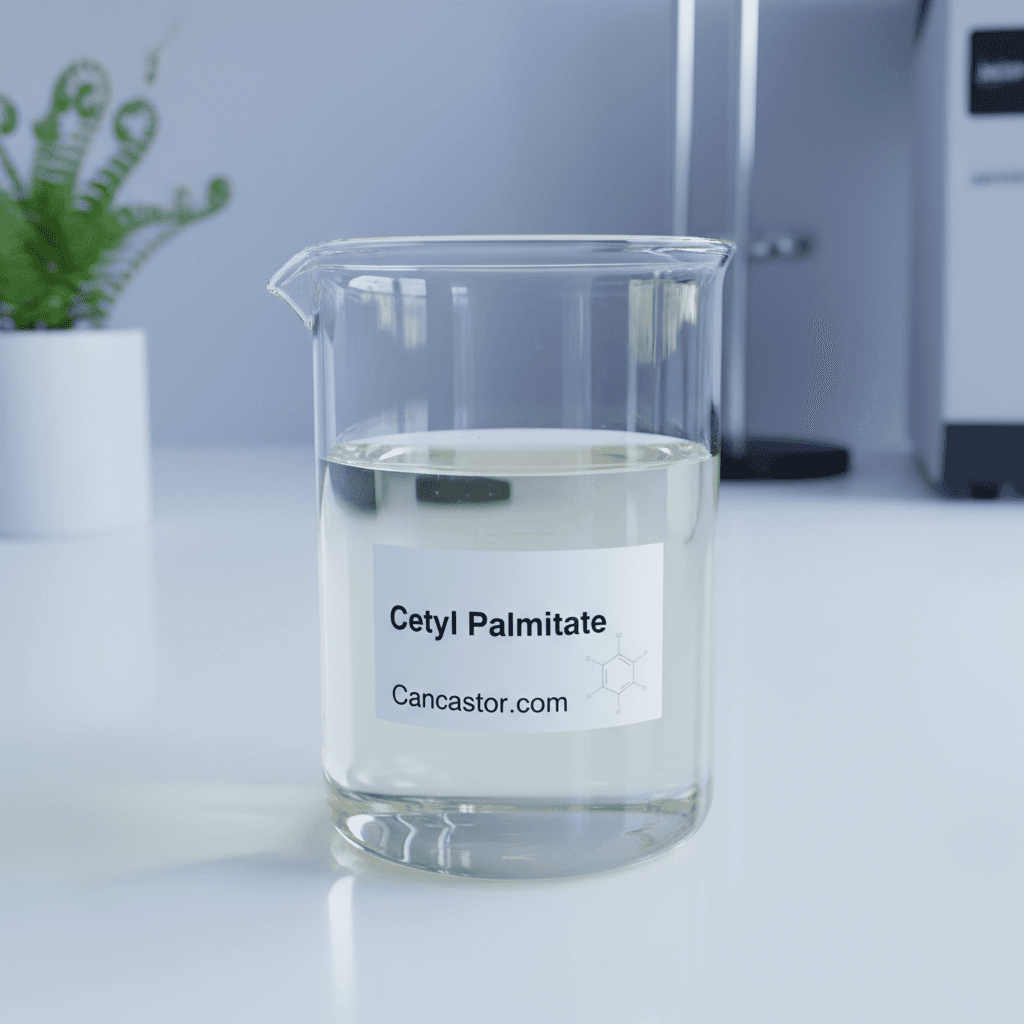
In the complex landscape of industrial chemical procurement, safeguarding operational integrity and consumer trust hinges on an uncompromising commitment to safety and regulatory compliance. For Compliance Officers and Industrialists, navigating the intricacies of material safety data and international standards is not merely a box-ticking exercise; it is the bedrock of sustainable business practices and a critical differentiator in a competitive market. Consider this: the global chemical industry faces an ever-evolving regulatory environment, with non-compliance costs potentially soaring into the millions, impacting brand reputation, supply chain stability, and ultimately, profitability. Within this environment, understanding the specific safety and regulatory profile of key ingredients like Cetyl Palmitate (CAS: 540-10-3), especially its cosmetic grade, becomes paramount. This comprehensive guide from CanCastor delves into the essential parameters, empowering B2B buyers to make informed, risk-averse decisions that uphold the highest standards of safety and compliance.
Understanding Cetyl Palmitate: A Technical Overview
Cetyl Palmitate is a premium fatty alcohol ester, derived either naturally from sources like palm oil or coconut oil, or synthesized for consistent purity and performance. Chemically, it is formed through the esterification of cetyl alcohol and palmitic acid. This waxy, white to off-white solid is celebrated for its emollient, thickening, and opacifying properties, making it indispensable across various sectors. For its cosmetic grade, the focus is squarely on high purity, minimal impurities, and excellent dermatological compatibility. As a cornerstone ingredient in personal care and pharmaceutical formulations, its technical specifications, including melting point, saponification value, and iodine value, are meticulously controlled to ensure consistent product performance and stability. For example, a typical cosmetic grade Cetyl Palmitate will exhibit a melting range around 48-51°C, indicating a high degree of purity essential for stable emulsion formulations and controlled release applications.
Deep Dive into Safety & Regulatory Compliance
For Compliance Officers, the primary concern revolves around the safe handling, storage, and application of industrial chemicals, coupled with adherence to global and regional regulatory frameworks. Cetyl Palmitate (Cosmetic Grade) generally presents a favorable safety profile, which is a significant advantage in formulations.
GHS Classification and SDS/MSDS Standards
Globally, the Globally Harmonized System of Classification and Labelling of Chemicals (GHS) provides a standardized approach to classifying chemicals and communicating hazard information. For Cetyl Palmitate (CAS: 540-10-3), specifically its cosmetic grade, it is typically not classified as hazardous under GHS criteria. This low hazard profile is a key factor in its widespread acceptance in consumer-facing products.
However, the absence of GHS hazard classification does not negate the need for comprehensive Safety Data Sheets (SDS), formerly known as Material Safety Data Sheets (MSDS). An SDS is a critical document for communicating information about chemical hazards and safe handling procedures. CanCastor ensures that every batch of Cetyl Palmitate is accompanied by a robust SDS, compliant with regional requirements (e.g., OSHA's Hazard Communication Standard in the US, or EU REACH Annex II for European markets). These SDS documents provide essential details on:
- Identification: Product name, CAS number (540-10-3), intended uses.
- Hazard Identification: Confirmation of non-hazardous classification.
- Composition/Information on Ingredients: Purity levels, absence of restricted substances.
- First-Aid Measures: General advice for exposure scenarios.
- Fire-Fighting Measures: Appropriate extinguishing media.
- Accidental Release Measures: Containment and clean-up protocols.
- Handling and Storage: Best practices for minimizing risk, including recommended ventilation and temperature ranges.
- Exposure Controls/Personal Protection: Recommendations for PPE (e.g., gloves, eye protection) during industrial handling.
- Physical and Chemical Properties: Melting point, density, solubility.
- Stability and Reactivity: Conditions to avoid.
- Toxicological Information: Data on acute and chronic toxicity (often indicating low concern).
- Ecological Information: Environmental fate and ecotoxicity.
- Disposal Considerations: Safe disposal methods.
- Transport Information: Non-hazardous for transport.
- Regulatory Information: Specific national and international regulations.
International Regulatory Compliance: REACH, EU CLP, and FDA
Navigating international chemical regulations is paramount for global supply chains. For Cetyl Palmitate, key considerations include:
- REACH (Registration, Evaluation, Authorisation and Restriction of Chemicals): Within the European Union, Cetyl Palmitate is registered under REACH. This registration ensures that its properties have been thoroughly assessed for potential risks to human health and the environment, affirming its suitability for industrial applications within the EU market. Compliance with REACH is non-negotiable for companies importing or manufacturing chemicals in the EU, and CanCastor's adherence to these standards provides a critical layer of assurance for our European partners.
- EU CLP (Classification, Labelling and Packaging): Aligning with GHS, the CLP Regulation implements GHS in the EU. As noted, Cetyl Palmitate typically does not meet the criteria for classification under CLP, simplifying its labeling and handling for compliance-conscious businesses.
- FDA (U.S. Food and Drug Administration): For cosmetic applications in the United States, ingredients like Cetyl Palmitate must comply with FDA regulations under the Federal Food, Drug, and Cosmetic Act. While the FDA does not "approve" cosmetic ingredients in the same way it does drugs, it monitors product safety. Cosmetic grade Cetyl Palmitate, when manufactured to high purity standards, is generally recognized as safe (GRAS) for its intended use in cosmetics, assuming proper formulation and labeling. Furthermore, for specific pharmaceutical applications as an excipient, Cetyl Palmitate must meet stringent monograph standards, such as those set by the United States Pharmacopeia (USP) or British Pharmacopoeia (BP), demonstrating a precise level of purity and quality.
These regulatory compliances underscore the product's safety profile and its suitability for sensitive applications, reducing the due diligence burden for B2B buyers.
Industrial Applications & Real-World Compliance Scenarios
Cetyl Palmitate's versatile properties make it a valuable component across several industries. Its regulatory profile and high purity are especially critical in:
1. Cosmetics and Personal Care (E-E-A-T Experience Example 1)
As a cosmetic grade ingredient, Cetyl Palmitate excels as an emollient, thickener, opacifier, and non-gelling co-emulsifier. It imparts a desirable slip and velvety feel to skin and hair care products without greasiness. Compliance is paramount in this sector due to direct consumer exposure.
Real-world scenario: A leading global skincare brand is developing a new anti-aging cream. They specify cosmetic grade Cetyl Palmitate to improve the cream's texture and stability. The brand's compliance team mandates that the supplier provide not only a current Certificate of Analysis (COA) confirming purity and absence of heavy metals (like lead, arsenic, mercury, cadmium below established ppb limits), but also an SDS and regulatory statements affirming REACH registration and non-hazardous classification. Failure to provide this documentation promptly could delay product launch, incur significant re-testing costs, or even lead to market withdrawal if non-compliant materials are inadvertently used. A supplier like CanCastor, providing transparent, comprehensive documentation, directly de-risks this crucial phase of product development and market entry.
2. Pharmaceuticals (Topical Formulations & Excipients) (E-E-A-T Experience Example 2)
In pharmaceuticals, Cetyl Palmitate can function as an excipient in topical ointments, creams, and lotions, contributing to texture, viscosity, and emulsion stability. It can also be used in some oral formulations as a lubricant or binder.
Real-world scenario: A pharmaceutical company is manufacturing a dermatological cream designed to deliver an active pharmaceutical ingredient (API). The Cetyl Palmitate used in this formulation must meet strict pharmaceutical grade standards, often specified by USP or EP (European Pharmacopoeia) monographs. This includes rigorous testing for identity, purity, heavy metals, residual solvents, and microbiological limits. The company's quality assurance team requires an exhaustive COA, an SDS, and often a comprehensive Technical Data Sheet (TDS) detailing specific physical and chemical properties. Any deviation from these standards, or lack of proper documentation, could lead to costly batch rejections, regulatory audits, or, in severe cases, patient safety concerns and product recalls. The meticulous documentation provided by suppliers for ingredients like Cetyl Palmitate directly contributes to the overall stability and safety profile of the pharmaceutical product. For more insights into formulation stability, you might review our guide on Unlocking Formulation Stability: The Definitive Guide to Sorbitan Tri Stearate (STS) for R&D Excellence.
3. Specialty Industrial Chemicals
Beyond consumer products, Cetyl Palmitate can find use in specialized industrial applications requiring its unique waxy and lubricating properties, though its cosmetic grade often means higher purity than might be strictly necessary. Its low toxicity profile is advantageous in applications where worker exposure or environmental impact are concerns, providing a safer alternative to other fatty esters. This highlights the growing market trend towards safer, more sustainable chemical solutions – a market projected to reach significant valuation within the next decade, with specific segments like bio-based esters showing robust growth.
CanCastor's Commitment to Quality, Compliance, and Trust
At CanCastor, we understand that for Compliance Officers and Industrialists, the security of their supply chain is paramount. Our dedication to providing premium Cetyl Palmitate (Cosmetic Grade) is rooted in a robust framework of quality assurance, transparency, and logistical excellence. This forms the cornerstone of our trustworthiness and directly mitigates risks for our B2B partners.
Uncompromising Quality Standards and Documentation
Every batch of Cetyl Palmitate (CAS: 540-10-3) supplied by CanCastor undergoes rigorous quality control. We provide comprehensive documentation to ensure complete transparency and compliance:
- Certificates of Analysis (COA): Detailing specific batch purity, physical properties, and confirmed adherence to specifications (e.g., USP/BP where applicable, or custom client specifications). This includes assurance regarding the absence of heavy metals and other impurities that could compromise product safety or performance.
- Technical Data Sheets (TDS): Offering in-depth technical specifications, handling guidelines, and typical application parameters, aiding in formulation and process optimization.
- Safety Data Sheets (SDS): Fully compliant with the latest GHS and regional regulations (e.g., OSHA HazCom, EU REACH Annex II), providing essential information for safe handling, storage, and emergency procedures. These detailed documents are critical for your internal safety protocols and regulatory filings.
Our commitment extends to providing comprehensive support for your Cetyl Palmitate product page inquiries and technical requirements. We pride ourselves on the consistency and reliability of our products, ensuring that the Cetyl Palmitate you receive consistently meets or exceeds the most stringent industry standards.
Global Bulk Logistics and Supply Chain Resilience
Procuring industrial chemicals in bulk requires sophisticated logistics. CanCastor specializes in global bulk supply, offering flexible packaging options, reliable shipping, and efficient delivery across continents. Our strategic partnerships and optimized supply chain ensure product integrity from our facilities to yours, minimizing transit risks and delays. This focus on seamless logistics reduces operational friction for our clients, allowing them to maintain consistent production schedules and avoid costly disruptions. For insights into robust procurement strategies, you might find our article on Optimizing PGPR (E476) Procurement: A Sourcing Director's Guide to Supply Chain Resilience & ROI particularly relevant.
Certifications and Sourcing Transparency
CanCastor adheres to internationally recognized quality management systems, such as ISO 9001, underscoring our commitment to consistent quality and continuous improvement. We also prioritize ethical and sustainable sourcing, with robust traceability mechanisms for our naturally derived products. Learn more about About CanCastor's sourcing standards and our commitment to responsible chemical procurement. Our transparent sourcing practices and adherence to international standards mean that when you choose CanCastor, you're not just getting a chemical; you're gaining a partner dedicated to reducing your operational risk and enhancing your brand's reputation for responsibility.
Conclusion: Partnering for Compliance and Performance
For Compliance Officers and Industrialists, the safe and compliant procurement of specialty chemicals like Cetyl Palmitate is non-negotiable. It underpins product quality, mitigates regulatory risks, and builds enduring trust with consumers and stakeholders. CanCastor is not just a supplier; we are your strategic partner in navigating these complexities, offering meticulously tested, fully documented, and reliably supplied cosmetic grade Cetyl Palmitate. Our unwavering commitment to E-E-A-T principles—demonstrated through deep expertise, real-world experience, authoritative data, and transparent trustworthiness—ensures you receive a product and service that meets the highest global standards.
Ready to elevate your product formulations with a trusted, compliant ingredient? Request a wholesale quote for bulk Cetyl Palmitate and explore our full range of specialty chemicals in our Browse our full chemical catalog.