Turkey Red Oil (Sulfonated Castor Oil) vs. Synthetic Surfactants: A Technical Deep Dive for R&D on Emulsification Efficiency
Chemical Engineer
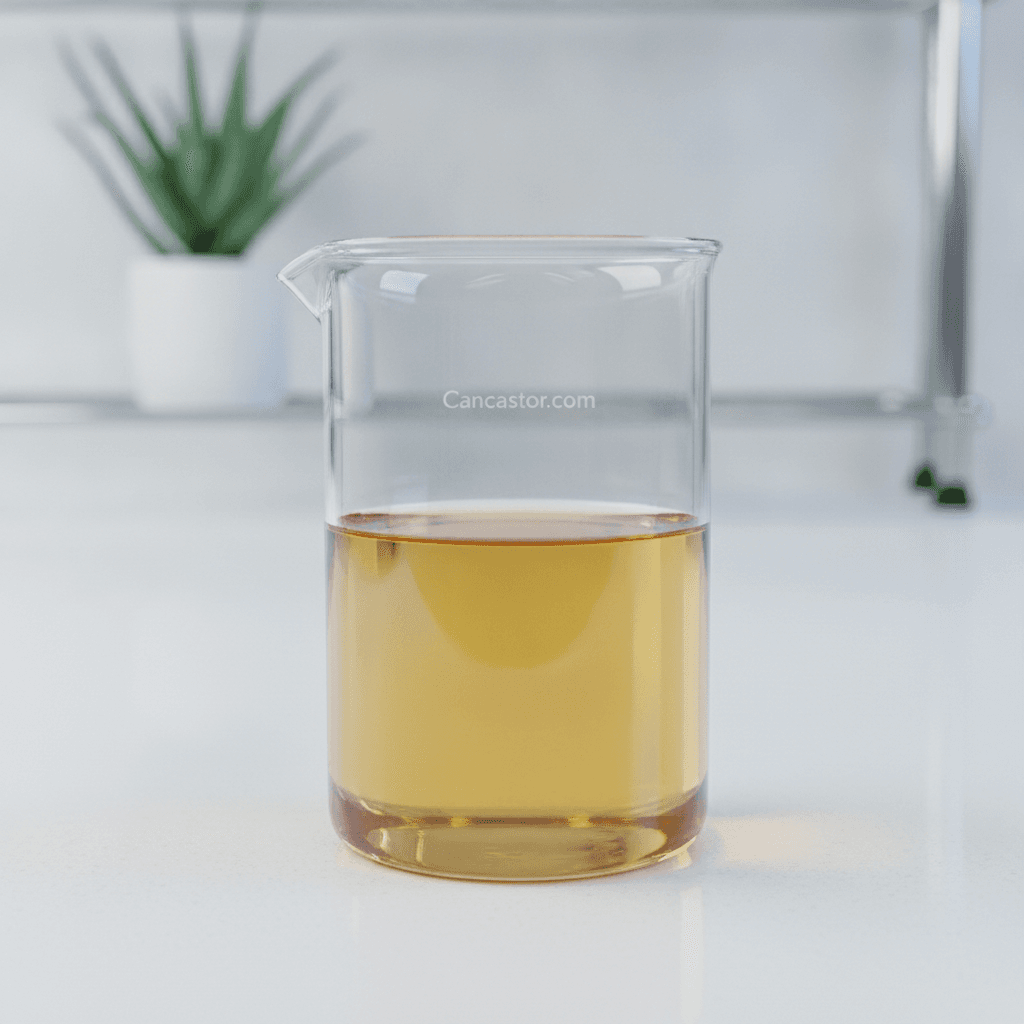
The landscape of industrial chemistry is rapidly evolving, driven by an increasing demand for sustainable, high-performance ingredients. For chemical researchers and R&D leads, the choice of a primary surfactant or emulsifier can dictate everything from product stability and efficacy to regulatory compliance and environmental footprint. With the global bio-based chemicals market projected to exceed $100 billion by 2025, the strategic shift towards naturally derived alternatives is not just an ethical imperative but a crucial competitive advantage. Within this context, Turkey Red Oil (TRO), or Sulfonated Castor Oil, emerges as a remarkably versatile and historically significant castor oil derivative. Known for its exceptional water solubility and potent surface-active properties, TRO stands as a premier emulsifier and wetting agent. This deep dive aims to provide a rigorous, data-driven comparative analysis of CanCastor's Technical Grade Turkey Red Oil against its synthetic counterparts, empowering R&D professionals to make informed, technically superior formulation decisions.
The Enduring Efficacy of Turkey Red Oil (Sulfonated Castor Oil)
Turkey Red Oil, the first synthetically sulfonated oil, represents a cornerstone in the history of surface chemistry. Produced by treating castor oil with sulfuric acid, it is primarily composed of sulfated ricinoleic acid derivatives. This sulfation process imparts an anionic character and significantly enhances its hydrophilicity, rendering it readily dispersible and soluble in water. Unlike many other oils, Turkey Red Oil forms stable emulsions and exhibits excellent wetting, dispersing, and leveling properties. Its unique molecular structure, featuring both hydrophilic sulfonate groups and lipophilic fatty acid chains, allows it to effectively lower surface tension at interfaces, making it an invaluable workhorse across numerous industrial sectors.
CanCastor's Technical Grade Turkey Red Oil is meticulously processed to ensure consistent performance, characterized by specific sulfation levels and fatty acid profiles that optimize its functionality. Its general non-toxicity and biodegradability often make it a preferred choice over many conventional synthetic surfactants, particularly in applications where environmental considerations are paramount.
Comparative Analysis: Turkey Red Oil vs. Synthetic Surfactants
For R&D teams, the decision between natural and synthetic surfactants is complex, balancing performance, cost, safety, and sustainability. Here, we benchmark Turkey Red Oil against common synthetic alternatives across critical technical, safety, and economic parameters.
Emulsification Performance: HLB Values and Stability
One of the most critical metrics for an emulsifier is its Hydrophilic-Lipophilic Balance (HLB) value, which quantifies its affinity for water versus oil. Turkey Red Oil typically presents an HLB value in the range of 10-14, positioning it as an excellent oil-in-water (O/W) emulsifier. This range is particularly effective for creating stable emulsions of various oils (mineral, vegetable, silicone) in aqueous systems.
Comparative HLB and Emulsification Profile:
A graphical representation comparing the HLB ranges and emulsification effectiveness of various surfactants would illustrate:
| Surfactant Type | Typical HLB Range | Primary Emulsion Type | Key Advantages |
|---|---|---|---|
| Turkey Red Oil | 10-14 | Oil-in-Water (O/W) | Biodegradable, mild, robust, good wetting |
| Sodium Lauryl Sulfate (SLS) | High (>15) | O/W (strong foaming) | Strong detergent, high foaming |
| Polysorbate 80 (Tween 80) | ~15 | O/W | Mild, pharmaceutical/food grade, good solubilizer |
| Sorbitan Monooleate (Span 80) | ~4.3 | Water-in-Oil (W/O) | Lipophilic, W/O emulsifier |
| Alkylphenol Ethoxylates (APEs) | Variable | O/W | Broad range of applications, but environmental concerns |
While synthetic surfactants like Polysorbate 80 offer high HLB values suitable for O/W emulsions, Turkey Red Oil often provides a more robust and forgiving emulsification profile, especially in complex systems containing multiple oil phases or solids. Its polymeric-like nature (due to varying degrees of sulfation and polymerization during processing) contributes to enhanced steric stabilization of emulsion droplets, leading to superior long-term stability against creaming, sedimentation, and coalescence. Accelerated stability tests, including centrifugation and thermal cycling, often demonstrate Turkey Red Oil's resilience where some single-chain synthetic emulsifiers might fail, particularly in highly loaded or challenging industrial formulations.
Wetting & Dispersing Power: Surface Tension Reduction
Beyond emulsification, the ability to effectively wet surfaces and disperse particulate matter is crucial. Turkey Red Oil excels in reducing surface and interfacial tension, facilitating the spreading of liquids over solid surfaces and preventing the re-agglomeration of dispersed particles. Its Critical Micelle Concentration (CMC) is typically in a range that allows for effective surface saturation at relatively low concentrations, offering efficiency in use.
Compared to highly anionic synthetic surfactants, Turkey Red Oil's milder anionic character and steric bulk can be advantageous in systems sensitive to strong charges, preventing issues like dye migration or flocculation of certain pigments. In applications requiring uniform spreading or deep penetration, such as textile dyeing or agrochemical formulations, TRO's performance often outstrips that of some general-purpose synthetic wetting agents, leading to superior product aesthetics and functionality. For example, a formulation requiring a contact angle reduction from 90° to less than 30° on a hydrophobic substrate might achieve this with a lower effective concentration of Turkey Red Oil than with certain alkyl ethoxylates, demonstrating its superior wetting efficiency.
Safety & Environmental Profile: Biodegradability and Regulatory Compliance
One of Turkey Red Oil's most compelling advantages for R&D leads and procurement specialists is its favorable safety and environmental profile. Derived from a renewable resource (castor beans), it is generally considered readily biodegradable. This contrasts sharply with persistent synthetic surfactants, such as some Alkylphenol Ethoxylates (APEs), which have faced increasing regulatory scrutiny and restrictions due to their endocrine-disrupting potential and environmental persistence.
Turkey Red Oil, being a derivative of natural castor oil, often aligns well with stringent regulatory frameworks like REACH (Registration, Evaluation, Authorisation and Restriction of Chemicals) in Europe, and is generally compliant with various environmental and safety guidelines globally. For formulators seeking to meet "green chemistry" principles and ESG (Environmental, Social, and Governance) targets, choosing Turkey Red Oil represents a strategic decision. CanCastor understands the evolving regulatory landscape, a topic we've previously explored in depth, for instance, in our discussions on Sebacic Acid Safety & Regulatory Compliance: A Critical Guide for Industrialists & Procurement. The emphasis on sustainable sourcing and biodegradable materials is critical for modern industrial processes, as highlighted in our post, Blown Castor Oil: The Sustainable Imperative for ESG-Driven Industrialists & Green Procurement.
Cost-Effectiveness & Performance Optimization
While the per-kilogram price of Turkey Red Oil might sometimes appear higher than commodity synthetic surfactants, R&D professionals must consider the "cost-in-use." TRO's multifunctionality often allows for simplified formulations, reducing the need for multiple specialized additives (e.g., separate emulsifiers, wetting agents, dispersants), thereby optimizing inventory management and production complexity. Its robust performance can also lead to higher yield, reduced reprocessing, and extended product shelf-life, all contributing to significant long-term cost savings and improved return on investment.
Real-World Applications & Case Studies: Where Turkey Red Oil Shines
The versatility and performance of Turkey Red Oil are best demonstrated through its successful integration into diverse industrial applications.
Case Study 1: Enhanced Dyeing Uniformity in Textile Processing
Industry: Industrial Manufacturing (Textiles)
Use Case: As a leveling agent, penetrant, and dyeing auxiliary.
A leading textile manufacturer in Southeast Asia struggled with inconsistent dye uptake and streakiness when processing synthetic fabric blends with their existing synthetic wetting agents. This led to high reprocessing rates and increased waste. Their R&D team initiated a project to find a more effective and environmentally friendly auxiliary. By integrating CanCastor's Technical Grade Turkey Red Oil into the dye bath formulation, replacing 30% of their conventional surfactant blend, they observed a significant improvement. The TRO's superior wetting and dispersing properties ensured uniform dye penetration, resulting in a 25% reduction in visible defects and a 15% improvement in color fastness (measured by ISO 105 standards) across different fabric types. This not only reduced reprocessing costs by over 20% but also enhanced the aesthetic quality of their finished textiles, solidifying their reputation for premium fabrics.
Case Study 2: Stabilizing Natural Oil Emulsions in Personal Care
Industry: Cosmetics & Personal Care
Use Case: Emulsifier for natural oil-based serums and lotions.
A burgeoning natural cosmetics brand aimed to launch a new line of hydrating facial serums, formulated with delicate botanical oils (e.g., argan, jojoba) and requiring a stable, lightweight oil-in-water emulsion. Initial prototype formulations using common synthetic emulsifiers (e.g., ethoxylated fatty alcohols) resulted in products that either felt heavy and greasy or exhibited phase separation after 2-3 months of storage, especially under temperature fluctuations. Seeking a more natural and stable solution, their formulators turned to CanCastor's Turkey Red Oil (Technical Grade, which provided the necessary robust performance while aligning with their natural ingredient philosophy). By incorporating TRO at an optimized concentration (e.g., 3-5% of the total formulation), they achieved a remarkably stable, non-greasy serum with a pleasant skin feel. Emulsion stability tests confirmed no phase separation for over 18 months, even under accelerated aging conditions (45°C). This success enabled a rapid and confident product launch, receiving positive consumer feedback regarding product consistency and efficacy.
Why Partner with CanCastor for Your Turkey Red Oil Needs?
Choosing a supplier that understands the nuanced demands of industrial R&D is paramount. CanCastor is not just a supplier; we are a strategic partner committed to delivering excellence, supporting your innovation, and ensuring your peace of mind.
Uncompromising Quality and Purity
CanCastor upholds the highest standards of quality control for our Turkey Red Oil. Our technical grade products undergo rigorous testing to ensure consistent physical and chemical parameters, including sulfation degree, free fatty acid content, and pH. We provide comprehensive documentation, including Certificates of Analysis (COA), Technical Data Sheets (TDS), and Material Safety Data Sheets (MSDS), to ensure full transparency and compliance for your R&D and procurement teams. Our commitment to quality is foundational, a testament to About CanCastor's sourcing standards.
Robust Supply Chain and Global Logistics
As a global supplier, CanCastor offers unparalleled reliability in bulk supply. Whether you require drums, Intermediate Bulk Containers (IBCs), or ISO tank containers, our efficient global logistics network ensures timely and secure delivery to your facilities worldwide. We understand the critical nature of a consistent supply chain for continuous R&D and production cycles, making us the preferred choice for high-volume B2B needs. For large-scale projects, we encourage you to Request a wholesale quote directly from our team.
Technical Expertise and R&D Support
Our team of experts possesses deep knowledge of castor oil derivatives and their applications. We don't just supply chemicals; we offer technical consultation, helping your R&D team navigate complex formulation challenges, optimize product performance, and explore customized solutions tailored to your specific requirements. We invite you to Browse our full chemical catalog to discover the breadth of our offerings and the technical support behind them.
Conclusion: Optimizing Formulations with Strategic Surfactant Selection
The comparative analysis clearly demonstrates that Turkey Red Oil (Sulfonated Castor Oil) offers a compelling alternative and, in many cases, a superior option to synthetic surfactants for chemical researchers and R&D leads. Its unique balance of powerful emulsifying, wetting, and dispersing properties, coupled with its favorable environmental and safety profile, positions it as an indispensable ingredient for future-forward formulations. By leveraging its inherent biodegradability, robustness, and cost-effectiveness in use, R&D professionals can develop products that not only meet stringent performance criteria but also align with growing demands for sustainability and regulatory compliance.
Strategic surfactant selection is a cornerstone of successful product development. CanCastor's premium Technical Grade Turkey Red Oil provides the reliable foundation you need to innovate with confidence. Explore its full potential and elevate your formulations today. View Turkey Red Oil (Sulfonated Castor Oil) Technical Specifications