Pale Pressed vs Commercial Castor Oil: Which Grade Is Right for Your Plant?
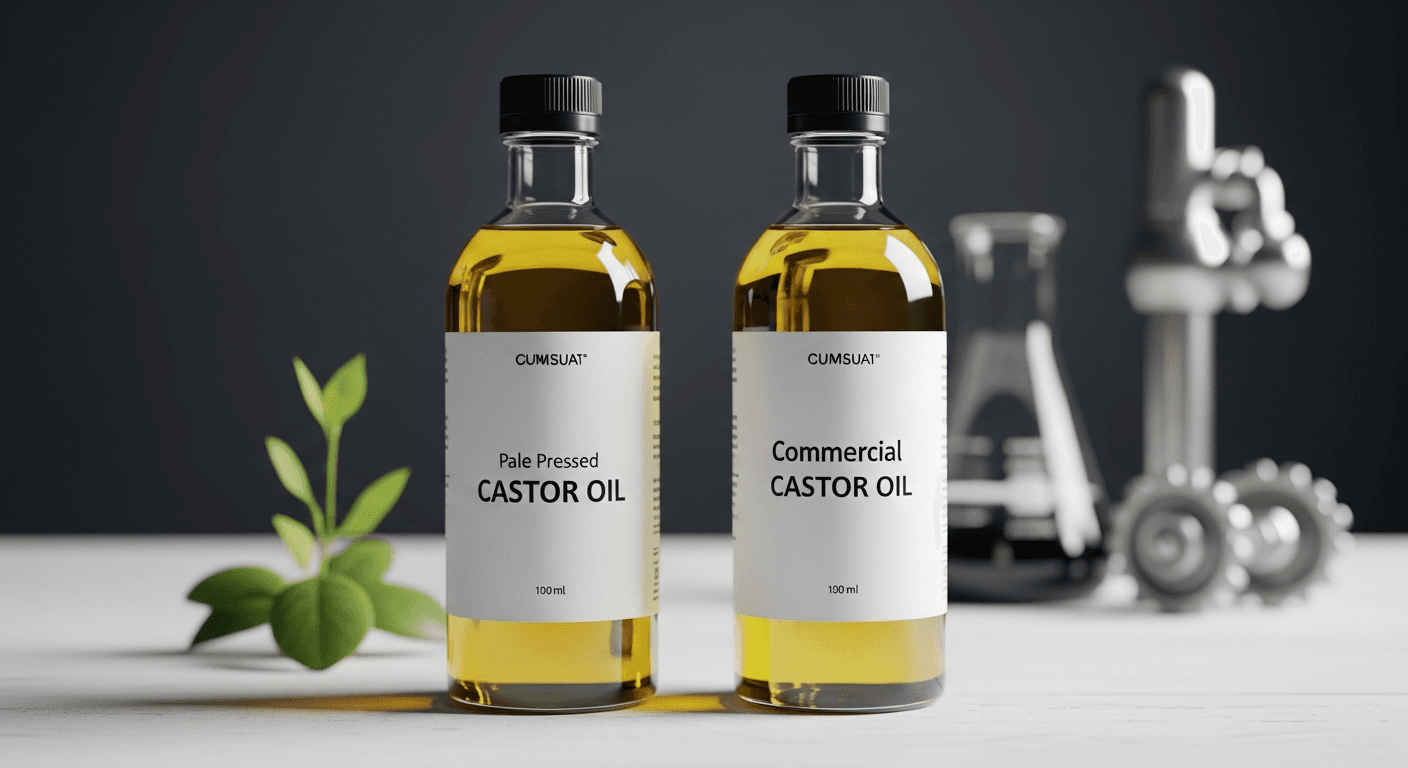
Pale Pressed vs Commercial Castor Oil: Which Grade Is Right for Your Plant?
Castor oil, a versatile vegetable oil derived from the castor bean, boasts a wide range of industrial and commercial applications. However, not all castor oil is created equal. Two primary grades dominate the market: pale pressed castor oil and commercial grade castor oil. Understanding the distinctions between these two is crucial for selecting the right grade for your specific needs. This guide will delve into the production methods, properties, applications, and quality considerations of each, empowering you to make an informed decision.
Understanding Castor Oil Grades
The difference between pale pressed and commercial grade castor oil lies primarily in the extraction process and the subsequent refining steps. These differences impact the oil's color, purity, and ultimately, its suitability for various applications.
Pale Pressed Castor Oil: The Premium Standard
Pale pressed castor oil is extracted using a cold-pressing method. This involves mechanically pressing the castor beans to release the oil without the use of heat or solvents. The resulting oil is then carefully filtered to remove any remaining solids. This process preserves the natural properties of the oil and yields a product with a light color, low acidity, and minimal odor.
Key Characteristics of Pale Pressed Castor Oil:
- Extraction Method: Cold-pressed (mechanical pressing).
- Color: Light yellow to nearly colorless.
- Odor: Mild, almost odorless.
- Acidity: Low.
- Purity: High.
Commercial Grade Castor Oil: Cost-Effective Alternative
Commercial grade castor oil is typically extracted using a combination of heat and solvents, such as hexane. This method allows for a higher yield of oil from the castor beans but can also result in a less pure product. The oil often requires more extensive refining to remove residual solvents and impurities. Explore our Castor Oil Products for different grades.
Key Characteristics of Commercial Grade Castor Oil:
- Extraction Method: Heat and solvent extraction.
- Color: Darker yellow to brown.
- Odor: Stronger, more pronounced odor.
- Acidity: Higher.
- Purity: Lower compared to pale pressed.
Applications: Where Each Grade Excels
The specific grade of castor oil required depends heavily on the intended application. Here's a breakdown of common uses and the recommended grade:
Pale Pressed Castor Oil Applications:
- Cosmetics and Personal Care: Due to its purity and mild odor, pale pressed castor oil is ideal for use in cosmetics, skincare products, and haircare formulations. It acts as a natural emollient, moisturizer, and conditioning agent. Its low acidity is gentle on the skin. Browse Collection
- Pharmaceuticals: The high purity of pale pressed oil makes it suitable for pharmaceutical applications, such as in the production of capsules and as a carrier oil for certain medications.
- Food Grade Applications: In some regions, pale pressed castor oil that meets specific food-grade standards can be used as a food additive or processing aid. (Check local regulations).
Commercial Grade Castor Oil Applications:
- Industrial Lubricants: Commercial grade castor oil is widely used as a lubricant in various industrial applications, including the manufacturing of greases, hydraulic fluids, and cutting oils. Its high viscosity and natural lubricity make it an effective lubricant under extreme conditions.
- Polyurethane Production: Castor oil derivatives are key ingredients in the production of polyurethane foams, coatings, and elastomers. The specific grade of castor oil may vary depending on the desired properties of the polyurethane product.
- Bio-Based Plastics: Castor oil is increasingly being used as a renewable feedstock for the production of bio-based plastics and polymers, offering a sustainable alternative to petroleum-based materials.
- Textile Industry: Used in textile finishing and dyeing processes. Learn about CanCastor
Quality and Supply Chain Considerations
Regardless of the grade of castor oil you choose, it is essential to source it from a reputable supplier that adheres to strict quality control standards. Consider the following factors:
- Source of Castor Beans: The quality of the castor beans significantly impacts the quality of the oil. Look for suppliers who source their beans from trusted growers and regions known for producing high-quality castor beans.
- Extraction and Refining Processes: Understand the extraction and refining processes used by the supplier. Ensure that they employ safe and environmentally responsible practices.
- Purity and Contaminant Testing: Request documentation on the oil's purity and contaminant levels. Reputable suppliers will conduct thorough testing to ensure that their products meet industry standards and regulatory requirements.
- Certifications: Look for certifications such as ISO 9001, HACCP, or organic certifications to ensure that the supplier follows best practices for quality management and food safety.
- Supply Chain Transparency: A transparent supply chain allows you to trace the origin of the castor oil and verify its quality at every stage of production. Contact Us
Making the Right Choice
Selecting the appropriate grade of castor oil hinges on your specific application requirements. If purity, color, and odor are critical factors, especially in cosmetics, pharmaceuticals, or food-related applications, pale pressed castor oil is the preferred choice. If cost-effectiveness is a primary concern and the application is less sensitive to color and odor, commercial grade castor oil may be a suitable alternative.
Ultimately, understanding the differences in extraction methods, properties, and quality considerations will guide you in making an informed decision. Always prioritize quality and source your castor oil from a reliable supplier like CanCastor. CanCastor Home offers premium castor oil solutions.
Ready to find the perfect castor oil for your needs? Contact Us today to discuss your specific requirements and explore our extensive range of high-quality castor oil products!