Castor Oil 101: Properties, Grades, and Industrial Applications
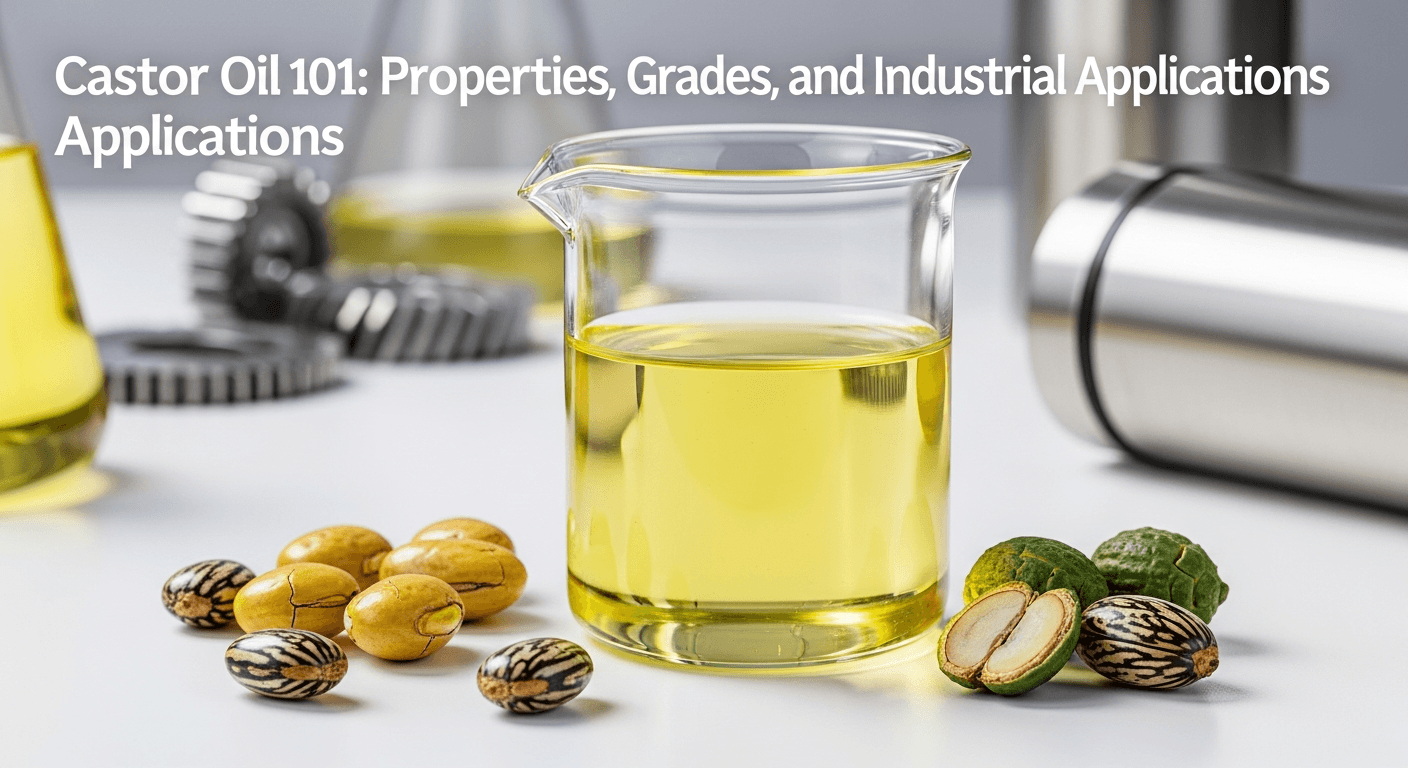
Castor Oil 101: Properties, Grades, and Industrial Applications
Introduction
Castor oil, a vegetable oil pressed from castor beans, has been utilized for centuries due to its unique chemical composition and versatile properties. From its traditional medicinal uses to its widespread industrial applications, castor oil is a valuable resource with a rich history. This comprehensive guide will explore the properties, grades, and diverse industrial applications of this remarkable oil. If you're interested in high-quality castor oil, Browse Collection.
What is Castor Oil?
Castor oil is a triglyceride derived primarily from ricinoleic acid. This unique fatty acid accounts for approximately 90% of the oil's composition, giving it distinctive properties not found in other vegetable oils. It is known for its high viscosity, stability, and hydroxyl value. Its botanical source is Ricinus communis, widely grown across the globe, with India, China, and Brazil being leading producers.
Key Properties of Castor Oil
- High Viscosity: Castor oil is notably viscous, making it an excellent lubricant and component in coatings. This characteristic contributes to its effectiveness in high-performance applications.
- Ricinoleic Acid Content: The high concentration of ricinoleic acid imparts unique chemical reactivity, making it useful in producing derivatives like sebacic acid and various polymers.
- Polarity: Castor oil is relatively polar, allowing it to dissolve in alcohols and other polar solvents. This characteristic is valuable in formulations of various chemical products.
- Biodegradability: As a vegetable oil, castor oil is biodegradable, making it a more environmentally friendly alternative to petroleum-based products in many applications.
Grades and Types of Castor Oil
Different grades of castor oil cater to specific applications, varying mainly in purity and processing methods.
- Industrial Grade Castor Oil: This is the most common grade, used in various industrial applications. It might contain some impurities, though these are usually within acceptable limits for industrial uses.
- Medicinal Grade Castor Oil: Refined and purified to meet pharmaceutical standards. This grade is commonly used for its laxative properties and other medicinal uses.
- Pale Pressed Castor Oil: A higher grade obtained by cold pressing, resulting in a lighter color and lower acidity. It is often used in cosmetics and personal care products.
- Hydrogenated Castor Oil: Castor oil that has undergone hydrogenation, resulting in a wax-like solid used as a thickener, emollient, and release agent. Learn more Learn about CanCastor.
Industrial Applications of Castor Oil
The versatility of castor oil stems from its unique chemical structure, lending itself to many industrial sectors:
- Lubricants: Its high viscosity and thermal stability make it an excellent lubricant, especially in high-temperature environments and demanding machinery.
- Coatings and Paints: Castor oil is used in paints, coatings, and inks due to its film-forming properties, providing flexibility, adhesion, and durability.
- Plastics and Polymers: It serves as a plasticizer in the production of flexible polyurethane foams, adhesives, and sealants. Castor oil derivatives like sebacic acid are monomers in nylon production.
- Cosmetics and Personal Care: Its emollient properties make it a common ingredient in cosmetics, lotions, and hair care products. It provides moisturizing and conditioning effects.
- Biofuel Production: Castor oil can be transesterified into biodiesel, offering a renewable alternative to fossil fuels.
- Hydraulic Fluids: Because of its non-gumming, non-corrosive, and excellent lubricating qualities, it is used in specialized hydraulic fluids.
Specific Use-Case Examples
- Automotive Industry: Used in brake fluids, high-performance lubricants, and greases.
- Textile Industry: Acts as a finishing agent, lubricant, and dyeing aid.
- Electronics: Used in capacitor dielectrics and specialty inks.
The Castor Oil Supply Chain and Quality
The quality of castor oil depends heavily on the entire supply chain, from bean cultivation to processing and storage. Factors include:
- Bean Quality: Healthy, mature castor beans yield higher-quality oil. The region of cultivation and agricultural practices influence bean composition.
- Extraction Methods: Cold pressing yields higher-quality oil compared to solvent extraction, although the latter is more efficient for large-scale production. Contact Us if you have specific questions.
- Refining Processes: Refining removes impurities and unwanted components, improving color, odor, and stability. Optimal refining processes are crucial for achieving desired quality levels.
- Storage Conditions: Proper storage in cool, dry environments protects the oil from degradation and maintains its properties.
Sustainability and the Future of Castor Oil
As industries seek more sustainable alternatives, castor oil presents a promising option. It is renewable, biodegradable, and can be sourced from sustainably managed farms. Ongoing research is exploring new applications for castor oil and its derivatives, further solidifying its role in a greener future. Consider using Castor Oil Products in your applications.
Conclusion
Castor oil is a truly versatile and essential resource with a wide range of properties and industrial applications. Its unique chemical composition, combined with its renewable nature, makes it a valuable asset in various sectors. Whether you're seeking a high-performance lubricant, a sustainable alternative for polymer production, or a natural emollient, castor oil offers a compelling solution. Explore our range of high-quality castor oil products and discover the possibilities. Visit the CanCastor Home today to learn more and make your purchase!