Castor Oil for Paint Industry
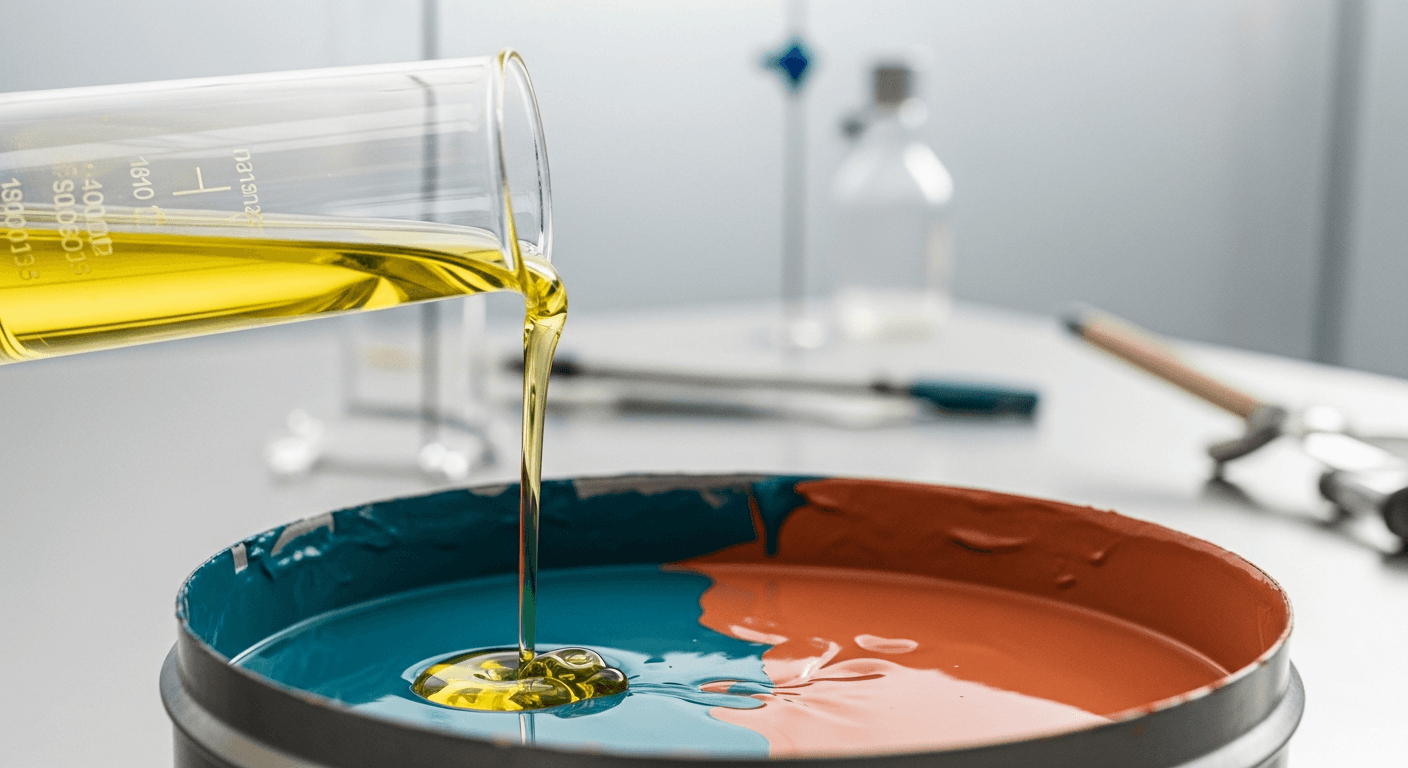
Castor Oil for Paint Industry: A Sustainable Powerhouse for Advanced Coatings
In an era where performance, sustainability, and innovation are paramount, the paint industry is constantly seeking advanced materials that can deliver superior results while minimizing environmental impact. Among the myriad of raw materials, castor oil stands out as a remarkable natural polyol, offering unparalleled benefits that position it as a critical ingredient for modern paint formulations. From enhancing durability and flexibility to improving adhesion and contributing to greener solutions, castor oil and its diverse derivatives are revolutionizing the world of paints and coatings.
At CanCastor, we understand the intricate demands of the paint and coatings sector. As a premium supplier of high-quality castor oil and its derivatives, we are committed to empowering manufacturers with sustainable, high-performance ingredients. This comprehensive guide delves into why castor oil is not just an alternative, but often a superior choice for a wide array of paint applications, underscoring its pivotal role in shaping the future of the industry.
The Unique Chemical Profile of Castor Oil: Why it Excels in Paints
What makes castor oil so uniquely suited for the paint industry? The answer lies in its distinct chemical composition. Unlike most other vegetable oils, castor oil is predominantly composed of ricinoleic acid, a monounsaturated fatty acid with a hydroxyl group (-OH) on the 12th carbon atom. This hydroxyl group is the key to its exceptional versatility and reactivity.
The presence of this hydroxyl group, along with a double bond, allows for a vast array of chemical modifications, making castor oil a highly reactive and adaptable building block. It can undergo reactions such as:
- Esterification: To create plasticizers or components for resins.
- Dehydration: To form Dehydrated Castor Oil (DCO), a drying oil.
- Hydrogenation: To produce Hydrogenated Castor Oil (HCO), a wax-like material.
- Ethoxylation: To yield non-ionic surfactants.
- Polymerization: To form polyols essential for polyurethane coatings.
This inherent chemical flexibility means that castor oil can be tailored to meet specific performance requirements across various paint and coating systems, providing formulators with a natural, renewable resource that offers both functionality and sustainability.
Castor Oil and Its Derivatives: Versatility in Paint Formulations
The true power of castor oil in the paint industry is unlocked through its extensive range of derivatives, each offering unique properties and applications:
-
Blown Castor Oil (BCO)
Also known as Oxidized Castor Oil, BCO is produced by blowing air through castor oil at elevated temperatures. This process increases its viscosity and specific gravity. BCO is widely used as a plasticizer, wetting agent, and rheology modifier in nitrocellulose lacquers, varnishes, and other paint formulations. It helps improve flow, leveling, and pigment dispersion, while also enhancing film flexibility and adhesion.
-
Dehydrated Castor Oil (DCO)
DCO is obtained by removing water from castor oil, which introduces conjugated double bonds into the fatty acid chains. This modification transforms castor oil into a fast-drying oil, similar in performance to tung oil or oiticica oil, but with better color retention. DCO is an excellent component for alkyd resins, polyurethane dispersions (PUDs), and varnishes, providing rapid drying times, good film hardness, and superior water and alkali resistance. It's especially valued in marine and protective coatings due to its outstanding durability.
-
Hydrogenated Castor Oil (HCO)
HCO is produced by hydrogenating castor oil, which converts its unsaturated fatty acids into saturated ones, raising its melting point. It's a hard, brittle, waxy material primarily used as a rheological additive, anti-settling agent, or matting agent in paints and coatings. HCO helps prevent pigment settling, improves sag resistance, and can contribute to a matte finish in certain paint systems. Its lubricating properties also make it useful in specialized coatings.
-
Castor Oil-based Polyols
These are perhaps some of the most impactful derivatives for the paint industry. Castor oil's natural hydroxyl functionality makes it an ideal bio-based polyol for the synthesis of polyurethane (PU) coatings. PU polyols derived from castor oil impart excellent flexibility, chemical resistance, abrasion resistance, and UV stability to coatings. They are crucial in developing high-performance, solvent-free, and waterborne polyurethane dispersions (PUDs), which are increasingly sought after for automotive, industrial, and architectural applications.
-
Castor Oil Fatty Acids & Esters
The fatty acids derived from castor oil, primarily ricinoleic acid, and their esters find use as plasticizers, dispersing agents, and wetting agents. They help improve pigment dispersion, enhance gloss, and provide flexibility to paint films. These derivatives are particularly valuable in specialized coatings where specific performance characteristics are required.
For a deeper dive into our extensive range of castor oil products and derivatives, please Browse Collection.
Core Applications of Castor Oil in the Paint Industry
Given its versatility, castor oil finds applications across various segments of the paint and coatings market:
-
Binder/Resin Component: Castor oil and its derivatives, especially DCO and castor oil-based polyols, are fundamental building blocks for synthesizing resins such as:
- Alkyd Resins: DCO-modified alkyds offer faster drying times, improved hardness, and better water resistance for general-purpose paints and enamels.
- Polyurethane Dispersions (PUDs): Castor oil polyols are crucial for producing high-performance waterborne PUDs used in flooring, automotive clear coats, and wood coatings, providing exceptional flexibility and abrasion resistance.
- Epoxy Esters: Castor oil can be reacted with epoxy resins to form epoxy esters, used in protective coatings for their corrosion resistance and adhesion properties.
-
Plasticizers: Castor oil and its esters act as effective plasticizers, improving the flexibility and impact resistance of paint films. This prevents cracking, chipping, and peeling, especially in coatings subjected to movement or stress, such as those on flexible substrates or in automotive applications.
-
Rheology Modifiers & Thickeners: Hydrogenated Castor Oil (HCO) is an excellent non-settling agent and rheological additive. It helps control the flow properties of paints, preventing sag on vertical surfaces while improving brushability and leveling, leading to smoother, more consistent finishes.
-
Wetting and Dispersing Agents: Certain castor oil derivatives improve the wetting of pigments and fillers, leading to better dispersion. This results in more stable paint formulations, enhanced color development, higher gloss, and improved opacity. Efficient dispersion is critical for achieving consistent quality and performance in paints.
-
Defoamers: In waterborne paint systems, foam generation can be a significant issue, leading to surface defects. Castor oil and its derivatives can be formulated into effective defoamers, ensuring smooth application and defect-free finishes.
-
Adhesion Promoters: Castor oil-based additives can enhance the adhesion of coatings to challenging substrates, including plastics, metals, and composite materials, ensuring long-lasting protection and finish.
-
Surface Modifiers: Derivatives can be used to modify surface characteristics, influencing properties like scratch resistance, gloss (from high gloss to matte), and haptic feel.
Performance Benefits: Elevating Paint Quality with Castor Oil
The integration of castor oil into paint formulations translates into a multitude of tangible benefits that elevate the overall quality and performance of the final coating:
- Enhanced Durability and Longevity: Castor oil-modified resins contribute to coatings that exhibit superior resistance to abrasion, chemicals, water, and weathering, leading to longer-lasting finishes, particularly in industrial and protective applications.
- Improved Flexibility and Impact Resistance: The inherent flexibility offered by castor oil derivatives prevents paint films from becoming brittle, significantly reducing the likelihood of cracking, chipping, and delamination upon impact or substrate movement. This is crucial for coatings on wood, metal, and flexible substrates.
- Superior Adhesion: Castor oil-based components can significantly improve the bond strength of paints to a wide range of substrates, ensuring better coverage and longevity, even on difficult surfaces.
- Excellent Water and Corrosion Resistance: DCO and castor oil-based polyols are instrumental in formulating coatings that offer robust protection against moisture and corrosive elements, making them ideal for marine, automotive, and heavy-duty industrial paints.
- Better Pigment Wetting and Dispersion: Achieving optimal pigment dispersion is key to vibrant colors and uniform opacity. Castor oil derivatives excel as wetting and dispersing agents, ensuring pigments are evenly distributed, leading to brighter, more consistent colors and improved hiding power.
- Optimized Flow and Leveling Properties: Rheology modifiers derived from castor oil allow for paints that apply smoothly, level out perfectly to minimize brush marks or roller textures, and prevent sagging on vertical surfaces, resulting in a flawless finish.
- Reduced VOCs and Odor: As a natural, bio-based ingredient, castor oil facilitates the development of low-VOC (Volatile Organic Compound) and low-odor paint formulations, aligning with growing regulatory demands and consumer preferences for healthier indoor environments.
The Sustainable Edge: Castor Oil as a Green Alternative
The drive towards sustainability is no longer optional; it's a necessity. The paint industry is actively seeking renewable and eco-friendly raw materials, and castor oil perfectly fits this mandate, offering a compelling green alternative to petroleum-based chemicals.
- Renewable Resource: Castor oil is derived from the beans of the Ricinus communis plant, a crop that thrives in arid and semi-arid regions, requiring minimal irrigation and not competing with food crops. This makes it a truly sustainable agricultural resource.
- Biodegradability: Castor oil and many of its derivatives are inherently biodegradable, meaning they break down naturally in the environment, reducing their ecological footprint compared to persistent synthetic alternatives.
- Reduced Carbon Footprint: Utilizing bio-based materials like castor oil helps reduce reliance on fossil fuels, thereby lowering the carbon footprint associated with paint manufacturing and product lifecycle.
- Low VOC Formulations: The use of castor oil-based polyols and other derivatives enables the formulation of low-VOC and even zero-VOC paints and coatings, meeting stringent environmental regulations and contributing to healthier indoor air quality in buildings. This makes it an ideal choice for green building certifications and eco-label products.
- Safety Profile: Castor oil has a long history of safe use across various industries, making it a reliable and responsible choice for formulators concerned with product safety and worker health.
CanCastor is deeply committed to sustainable sourcing and ethical practices, ensuring that our castor oil products not only meet the highest quality standards but also support a healthier planet. Learn about CanCastor and our commitment to sustainable practices.
CanCastor: Your Trusted Partner for Premium Castor Oil in Paints
Choosing the right supplier for castor oil and its derivatives is as crucial as selecting the ingredient itself. At CanCastor, we pride ourselves on being a premium supplier, offering unmatched quality, reliability, and expertise to the paint industry.
Our commitment to excellence is reflected in:
- Rigorous Quality Control: We implement stringent quality assurance processes at every stage, from sourcing to delivery. Our castor oil undergoes comprehensive testing to ensure consistent purity, chemical profile, and performance, guaranteeing that you receive only the highest-grade material for your paint formulations.
- Reliable Supply Chain: With robust logistics and strong relationships with growers, we ensure a consistent and dependable supply of castor oil, mitigating risks for your production schedules and allowing you to plan with confidence.
- Technical Expertise: Our team of experts possesses deep knowledge of castor oil chemistry and its applications in paints and coatings. We offer unparalleled technical support, helping you optimize your formulations, troubleshoot challenges, and innovate new products.
- Custom Solutions: We understand that every paint formulation is unique. CanCastor can provide tailored castor oil solutions and derivatives to meet your specific technical requirements and performance objectives.
Partnering with CanCastor means gaining a reliable ally dedicated to your success, providing you with the sustainable, high-performance ingredients you need to stay ahead in a competitive market. We invite you to explore our comprehensive range of castor oil products designed for the paint industry by visiting our Castor Oil Products page.
Conclusion: Paving the Future of Paints with Castor Oil
Castor oil has firmly established itself as an indispensable ingredient in the modern paint industry. Its unique chemical structure, leading to a wide array of versatile derivatives, enables the formulation of paints and coatings that are not only high-performing and durable but also increasingly sustainable and eco-friendly. From enhancing flexibility and adhesion to improving water resistance and contributing to low-VOC solutions, castor oil is a testament to the power of nature in driving industrial innovation.
As the paint industry continues to evolve, the demand for renewable resources that offer both functional excellence and environmental responsibility will only grow. Castor oil stands ready to meet this challenge, offering a clear path towards a more sustainable and high-performance future for paints and coatings worldwide.
Embrace the natural advantage of castor oil in your next paint formulation. Partner with CanCastor, your trusted supplier, to unlock the full potential of this extraordinary natural resource. We are here to support your innovation and help you achieve your performance and sustainability goals. To discuss your specific requirements or to learn more about how our premium castor oil can benefit your products, please do not hesitate to Contact Us. Discover the difference quality makes, right from the CanCastor Home page.